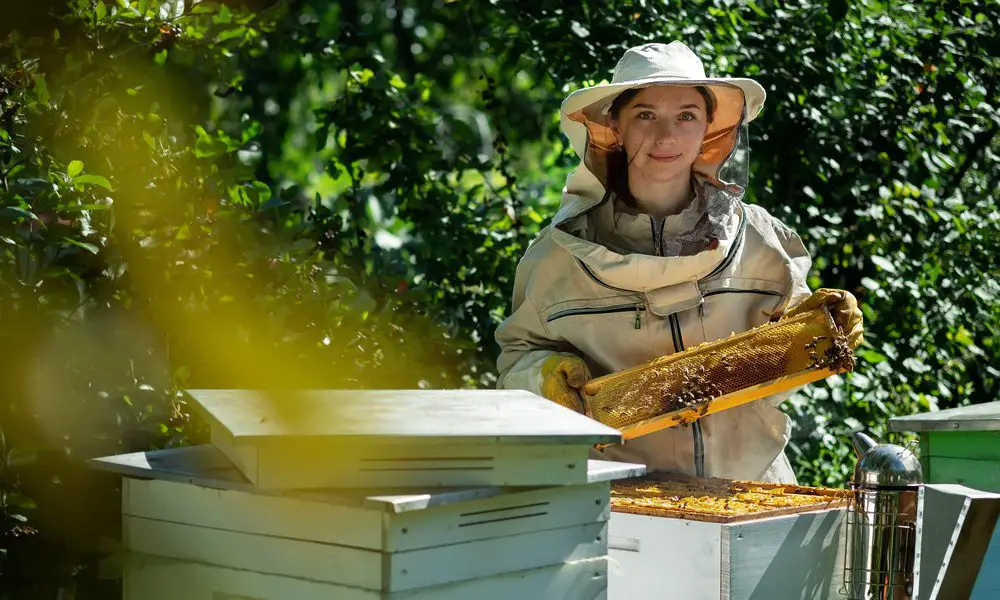
Humankind started beekeeping thousands of years ago. But the beekeeping suit as we know it today didn’t exist until the 1950s. Early beekeepers used more rudimentary coverings to protect their head, face, and neck from stings. Over time, they experimented with and refined these to give us the full-body suits and fine-mesh veils we use nowadays. If you’re curious how beekeeping suits evolved from woven-grass face coverings to modern protective gear, let’s take a closer look at their fascinating history.
Ancient Beekeepers: No Suit, Just Guts
Ancient art offers us a glimpse into early human interactions with bees. Paintings on cave walls in Spain, dating back around 8,000 years, show figures climbing ladders to reach hives. These early honey hunters didn’t have protective suits. They relied on smoke from torches to pacify the bees and their own bravery to get the job done. It was a risky business, but the sweet reward of honey was worth the danger. This method of minimal protection continued for centuries.
The Middle Ages: Wicker Baskets and Woven Masks
During the Middle Ages, beekeeping became more widespread across Europe. People kept bees in straw skeps, which were upturned baskets. When it was time to harvest honey, beekeepers needed some form of facial protection. They crafted masks from woven materials like wicker or grass. These masks weren’t foolproof, but they offered a basic barrier against angry bees.
The 18th Century: Gauze Veils
The 18th century brought more refined ideas about beekeeping protection. Beekeepers began to use veils made of cloth or gauze. They draped these over a wide-brimmed hat to keep the material away from the face. This simple invention provided better visibility and ventilation than the old wicker masks. It was a step toward the modern beekeeping veil.
The First Full Beekeeping Suits
The 1950s finally saw the arrival of the full-body beekeeping suit as we recognize it. These suits were made of heavy cotton or canvas and covered the entire body. They were one-piece garments with zippers for easy entry. The veil was often attached to the suit to create a completely sealed-off protective bubble.
Putting It All Together: The Modern Suit
Today’s beekeeping suits combine all these innovations into one highly effective piece of equipment. They’re lightweight, well-ventilated, and offer complete protection from head to toe. Features like elastic cuffs, thumb loops, and multiple pockets add to their functionality. The modern suit is the result of centuries of trial and error.
Beekeepers now have a wide array of options when it comes to protective clothing. They can choose between full suits or jackets depending on their comfort level and the temperament of their bees. This variety allows each beekeeper to find the perfect balance of protection and comfort for their needs.
Your Best Protection Today
The history and evolution of beekeeping suits is incredibly interesting. Can you believe the earliest honey hunters didn’t wear anything at all when they tended to their bees, and that our medieval ancestors wore such primitive gear? It makes you thankful for the advanced protection we have today.