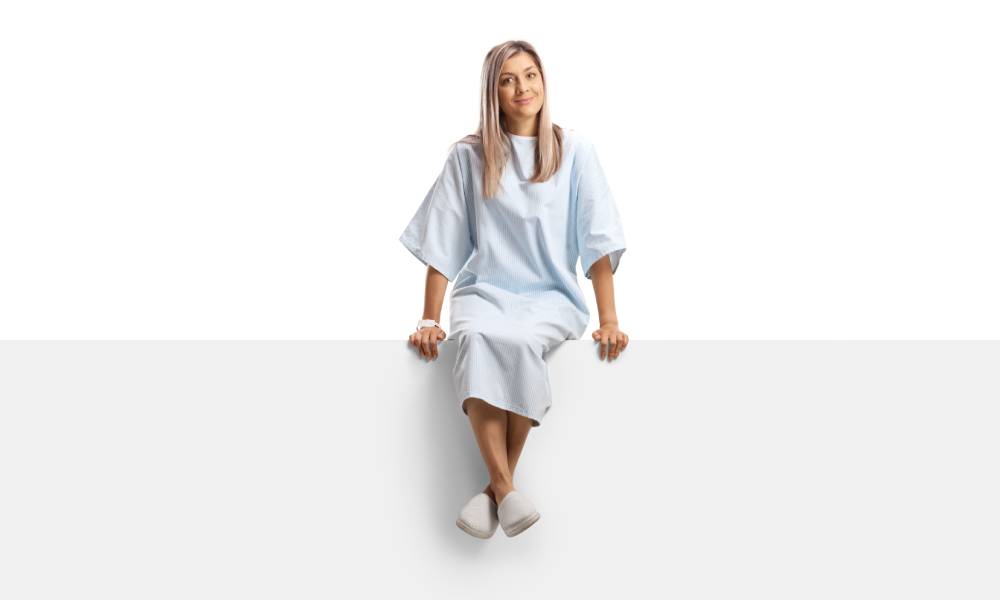
Hospital gowns have an unusual design. The loose front. The embarrassing open back. All the snaps, ties, and buttons. Why are they like that? If you’re curious about the reason behind these hospital gown features, here’s what you need to know about each one’s practical purpose.
The Open Back Gives Medical Staff Quick Access
That open back isn’t a design flaw. Doctors and nurses need direct access to a patient’s back, whether that’s for a spinal injection, an IV placement, or checking surgical incisions. If the gown closed completely, staff would have to fully undress a patient every time. The opening runs down the center and ties at the neck and waist, staying closed enough to preserve some privacy while still opening in seconds when needed.
The Ties and Snaps Let Staff Work Without Removing the Gown
Those little ties and snaps let staff expose just one area at a time. A nurse placing a chest monitor unsnaps the shoulder. A doctor checking an abdomen unties the side. Nobody has to remove the whole gown to reach one body part, which keeps monitors, wires, and IV lines from getting tugged or shifted.
The One-Size Design Fits a Wide Range of Patients
Hospitals see patients of every shape and size, so gowns are cut generously with adjustable closures. Making them oversized by default and using ties to cinch the fit means staff aren’t hunting for the right size during intake. Hospitals also stock pediatric and bariatric sizes for patients at either end of the range.
The Short Length Keeps the Gown Out of the Way
Hospital gowns stop at the knee or above because a longer garment is a tripping hazard when a patient is getting up or transferring to a wheelchair. It also gets in the way during examinations of the lower body. The length is optimized for mobility and clinical access, not lounging.
What Comfort Can Look Like Despite All That
Aside from what’s practical for staff, hospitals need to consider what makes a good hospital gown for patients. The top priority in this regard is comfort. Yes, hospital gowns aren’t the most comfortable things around, simply due to how exposed they leave the wearer. But most hospitals still use soft cotton blends with adjustable ties and closures for a more secure fit.
The Design of Hospital Gowns Is More Intentional Than It Looks
Every feature serves a purpose. The open back, the short hem, the ties—they’re all there to help staff do their jobs faster and with less disruption to the patient. The design of hospital gowns prioritizes clinical function above all else, and that’s unlikely to change. What does change is the material and fit options available, as more hospitals look for ways to balance function with basic patient dignity.