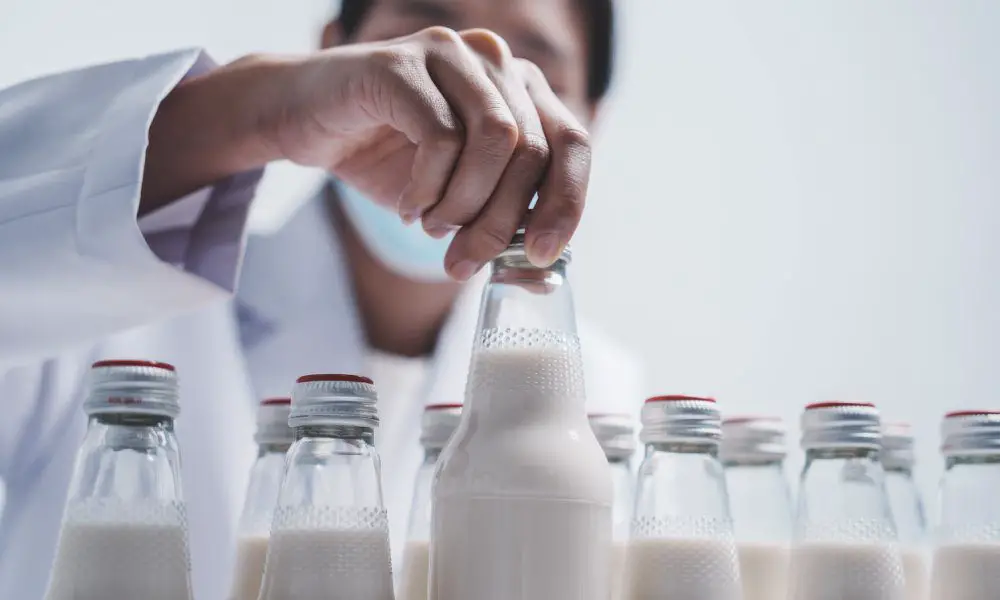
What do you imagine the dairy industry was like in the past?
It involved an immense amount of manual labor. Workers had to milk cows by hand, strain the milk, and then cool, store, and label the milk. Next, workers had to manually load milk cans onto trucks, drive to the processing plant, and unload the cans again. At the processing plant, workers pasteurized, homogenized, and packaged the milk before selling it.
As you might expect, this highly labor-intensive process wasn’t the most efficient. The invention of milk machines and other equipment replaced many manual labor processes. Let’s look into how these innovations have helped the dairy industry go green.
Making Use of Methane
Methane is a harmful greenhouse gas that contributes to climate change. It’s a common byproduct of cows, as they digest their food and release it through burps and flatulence. However, the dairy industry has taken steps to reduce its methane emissions by utilizing gas as a sustainable energy source.
Many dairy farms have invested in anaerobic digesters, which are large tanks that capture and store cow manure. Inside these tanks, bacteria break down the manure and produce biogas, which is primarily composed of methane.
Farmers can then use this biogas to generate electricity, heat water, or even power farm equipment. This reduces the amount of methane released into the atmosphere while providing a renewable and cost-effective energy source for farmers.
Milking, Done by Robots
With the advancement of technology, dairy farms have been able to incorporate robotic milking systems into their operations. These systems are complex, but to summarize how milking machines work, they use a vacuum to extract milk from the cow’s udder while applying pulsating pressure to mimic the calf’s suckling motion.
This technology boosts sustainability in the dairy industry by helping farms manage resources more efficiently. Using these machines results in lower resource use per liter of milk because they can milk cows faster and more consistently than humans. As a result, less feed, water, and energy are necessary per unit of milk since each cow becomes more productive.
A Cooler Way of Cooling
Until recently, farms used refrigeration to cool milk. This, of course, required a constant power supply. And farms used more than just one standard-sized fridge; they needed an entire cooling room. You can imagine how much energy that requires every day!
Plate cooling helps to reduce the energy consumption associated with cooling. Plate coolers are metal enclosures that house a series of thin, metal tubes. The milk flows through one set of smaller tubes while chilled water flows through the metal plates surrounding it. It causes a rapid temperature decrease, cooling the milk nearly ten times more quickly than standard refrigeration. Because of this, plate coolers require far less energy to operate.
These are just some of the ways technology has positively impacted sustainability in the dairy industry. As new technology emerges, we’re bound to see even further improvements to areas like waste reduction, water conservation, and energy efficiency, which will help farms drop their carbon footprints even further.