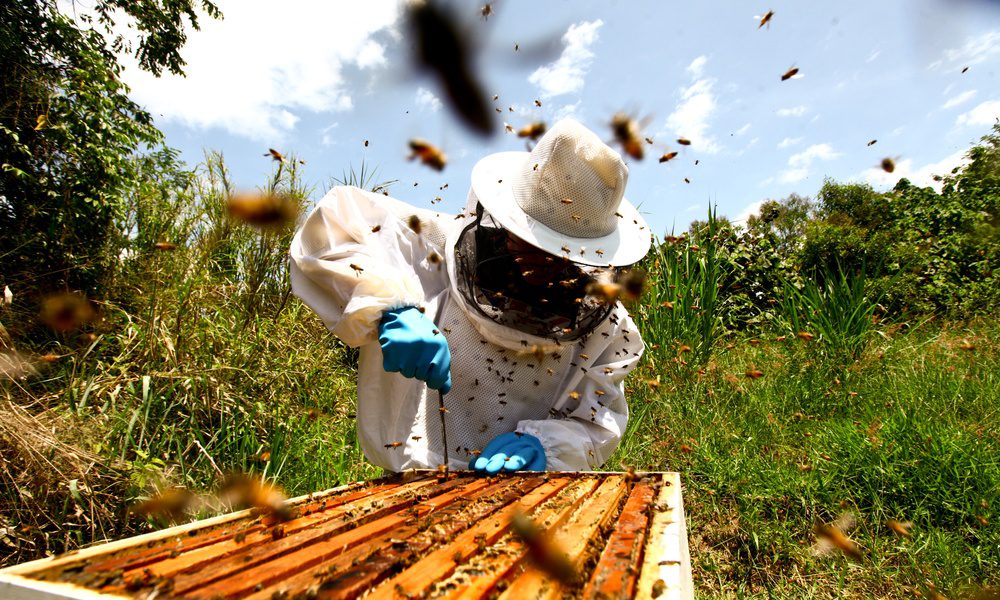
Have you ever wondered how beekeepers avoid getting stung by the literal thousands of bees they’re surrounded by every day? While it’s a common misconception that bees are aggressive—most don’t sting unless provoked—beekeeping does put its participants at unique risk. If you want to know how they get through their daily work unscathed, here are some of the strategies they use.
A full beekeeping suit covers the body from neck to ankle in thick, light-colored fabric. Bees respond more aggressively to dark colors, so the lighter material reduces provocation. Gloves extend that coverage to the hands, where bare skin would otherwise be an easy target. No gaps, no exposed skin, no invitation.
In addition to suits and gloves, beekeepers will also wear veils. Veils are protective coverings designed specifically for the head and neck, the areas most vulnerable during hive work. They come in a few distinct varieties, including hooded, round, and folding, each with its own fit style and level of coverage depending on what the beekeeper prefers for the job.
When smoke drifts into a hive, bees shift into a feeding response and become far less reactive to movement and disturbance. A beekeeper uses that window to inspect frames without triggering a defensive response from the colony. It’s not a guarantee of calm, but it changes the dynamic enough to make the work manageable.
Warm, sunny afternoons tend to produce calmer hives because foragers are out working rather than clustered inside. Cold, overcast days bring a full, agitated colony with nowhere to go. Experienced beekeepers read those conditions before they ever lift a lid—knowing when to wait is just as valuable as knowing what to do once you’re in.
Beekeepers reduce the risk of stings with the above-mentioned strategies. But even with every precaution, stings still happen. Quick stinger removal limits how much venom enters the skin, since leaving it in continues the delivery. Cold reduces localized swelling. Over time, many beekeepers also develop a natural tolerance to bee venom, which makes the reaction progressively milder.
Create cleaner embroidery designs with practical tips for fixing thread breaks, puckering, skipped stitches, and…
Learn how to build a shipping container office with practical guidance on site preparation, insulation,…
Before buying a 3D printer for a new hobby, explore how 3D printing and the…
Find out how often you should inspect your crawl space at home so you can…
Get ahead of tax season with practical tips for small business finances. Here's how to…
Brand managers who plan campaign costs strategically gain a sharp view of budgeting, timing, priorities,…