It’s the middle of winter, and you notice a distinct chill in the air. You glance at the thermostat, but the temperature keeps dropping. A broken baseboard heater can turn a cozy home into an icebox very quickly.
Panic often sets in, but you can resolve many common heating issues without expensive professional help. You just need to know where to look. Don’t let a cold emergency keep you down—here’s what to do if the baseboards stop.
Check the Power Source
Start with the most obvious culprit. Often, the issue lies not with the heater itself, but with the power supply. Go to your main electrical panel and look for the specific circuit breaker that controls the heater. Baseboard heaters usually run on 240-volt circuits, which means they occupy a double-pole breaker (two slots).
Inspect the breaker handle. If it sits in the middle position or flipped completely to OFF, you likely have a tripped breaker. Snap it firmly to the OFF position and then back to ON. If it trips again immediately, leave it off. This indicates a short circuit or a serious electrical fault that requires professional attention.
Inspect Thermostat Settings
Sometimes the problem lies with the controls rather than the heating element. Verify that the thermostat actually calls for heat. Turn the dial or press the button to set the temperature at least five degrees higher than the current room temperature.
Listen closely for a click. That sound indicates the thermostat successfully sent a signal to the heater to turn on. If you hear nothing and the heat stays off, you might have a faulty thermostat. Older mechanical thermostats use contacts that can corrode or degrade over time, preventing the electrical connection.
Clear Obstructions and Airflow
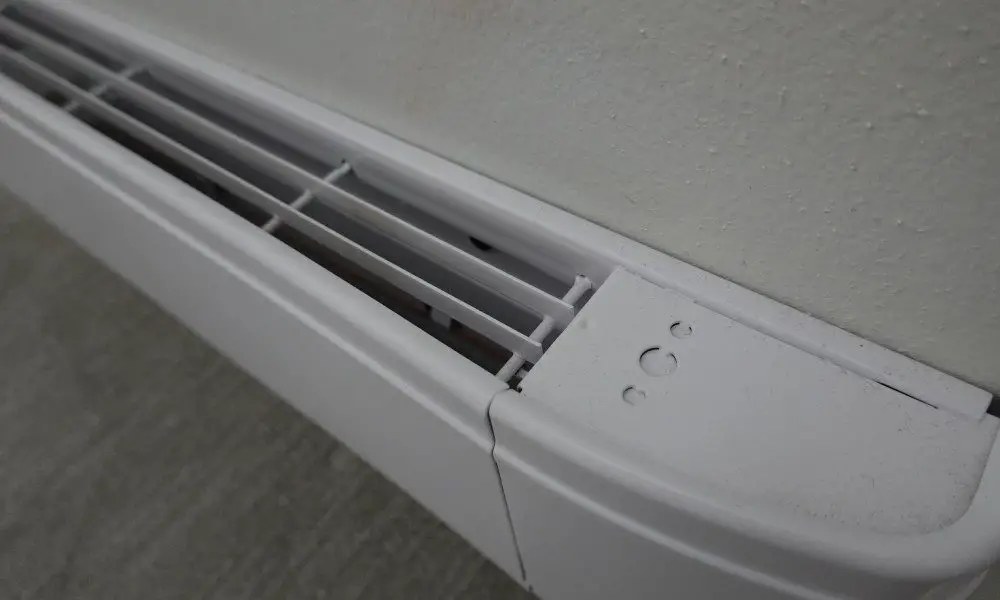
Baseboard heaters operate on the principle of convection. Cool air enters through the bottom of the unit, warms up over the heated fins, and rises out the top. Furniture, thick drapes, or dust bunnies block this necessary airflow. When air cannot move, the unit overheats, and the safety limit switch shuts it down to prevent a fire.
Follow this checklist to ensure proper airflow:
- Move sofas, beds, and other furniture at least six inches away from the unit.
- Lift curtains or hem them so that they hang at least four inches above the heater.
- Vacuum the fins inside the cover to remove thick dust or pet hair buildup.
- Check that the bottom air intake remains clear of thick carpeting.
Assess Physical Condition
If the breaker works and the thermostat clicks, the issue might sit inside the unit. Turn the power off at the breaker panel before you touch anything on the heater. Remove the front cover to look for loose wire connections.
While you have the cover off, look at the condition of the metal and the element. Corrosion and age can damage the internal components significantly. You may need to replace rusty baseboard heaters entirely if the metal looks compromised or if the aluminum fins have deteriorated beyond repair. Rust creates resistance and can lead to uneven heating or total failure.
You can handle many heating failures with a few minutes of inspection. Regular cleaning and basic awareness of your electrical panel keep your system running efficiently. However, if you smell burning plastic, see sparks, or find melted wires, stop immediately. Follow this guide on what to do if your baseboards stop and don’t let a cold emergency turn into a disaster.