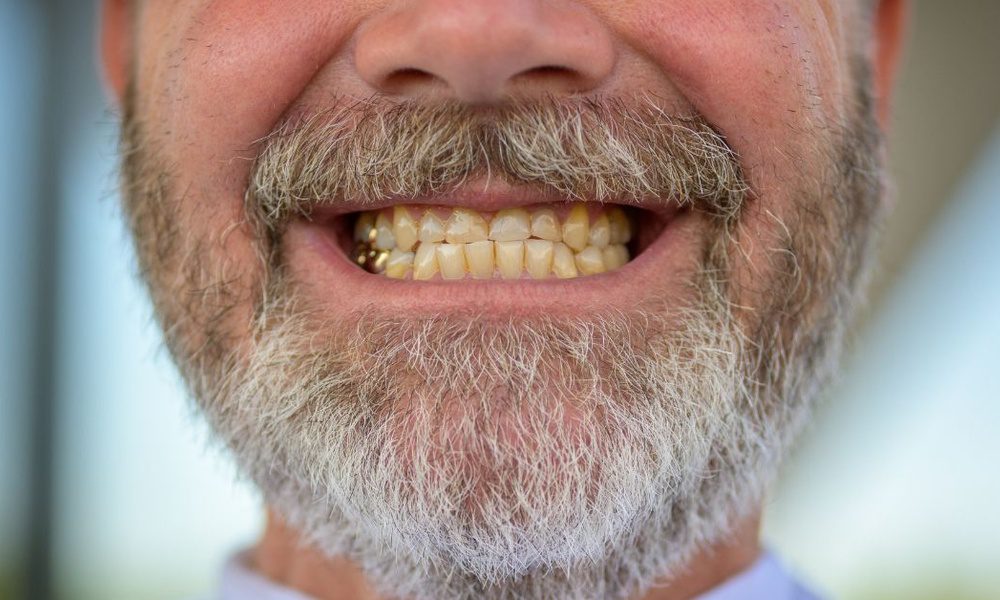
If you’ve looked in the mirror lately and thought your smile wasn’t quite as bright as it used to be, you might be right. Your teeth do get yellow as you age, and we’re here to explore why, as well as what you can do about it.
It Starts With Your Enamel
Enamel is the hard outer shell of your tooth. It’s naturally white, and when you’re young, it’s thick enough to give your teeth that bright look. But over the years, enamel wears down from chewing, brushing and exposure to acids in food and drinks. As it thins out, it becomes more translucent. What starts showing through underneath is dentin, the layer just below the enamel, and dentin is naturally yellow.
Years of Staining Add Up
You don’t have to be a heavy coffee drinker for staining to become more pronounced with age. Think about everything your teeth absorb over decades: coffee, tea, wine, berries, tomato sauce, soy sauce, cola and so forth. These foods and drinks contain pigments called chromogens that bind to tooth enamel. On top of that, tannins (found in tea and wine) make it even easier for those pigments to stick. Over 60 or 70 years, that level of exposure leaves a mark.
Medications Play a Role Too
A lot of older adults take medications that contribute to tooth discoloration. Antihistamines, blood pressure medications and antipsychotics are some of the more common culprits.
Tetracycline antibiotics are also well-known for causing deep, stubborn discoloration that comes from inside the tooth. If you took these as a child or young adult, that staining may be showing up more clearly now that your enamel has thinned.
Dry Mouth Makes Things Worse
Saliva does a lot of work you probably don’t think about. It neutralizes acids, washes away food particles and helps keep the surface of your teeth protected. Many medications that older adults take reduce saliva production, which lets staining compounds sit on the teeth longer and makes enamel more vulnerable to erosion. The result is faster discoloration and more of it.
What You Can Do About It
Now you know why your teeth are getting yellow as you age, and though the issue is purely cosmetic, you can fix it if you want to.
The solution is to visit your dentist. On top of regular cleanings keeping discoloration at bay and protecting the enamel you have left, a dentist can recommend cosmetic procedures to correct yellowing. For example, they might walk you through the process and timeline for porcelain veneers, which are permanent caps that bond to your teeth. They brighten your smile and act as a protective barrier for your enamel.
If you’d prefer to avoid this procedure, you can talk to your dentist about whitening treatments. They can discuss the safety of teeth whitening for seniors with you and let you know what the process entails.
And those are just two potential solutions. We strongly suggest you meet with your dental care provider to review all your options, what you’re a particularly strong candidate for, and how to care for your teeth at this stage of life.