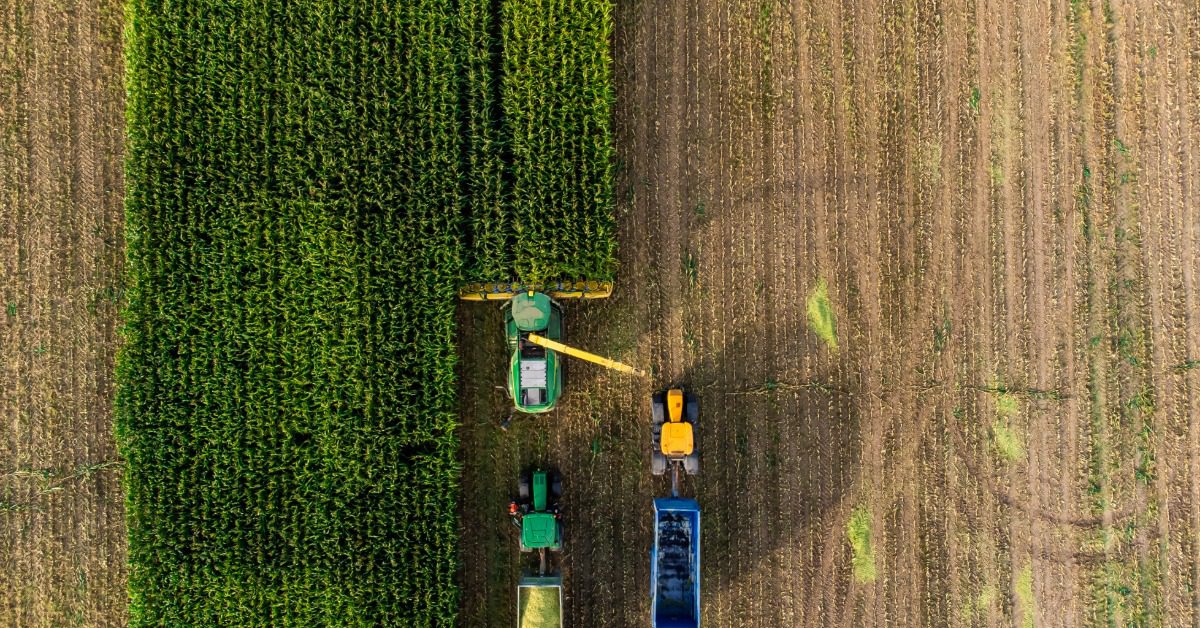
Long, long ago, farmers harvested their crops by hand. Then came mechanized harvesting equipment, and farms began relying heavily on fuel-powered machines. Increasingly, crop harvesting became less and less sustainable, but farmers are working to shift toward methods that put less strain on the land. Let’s look at some ways farmers are making crop harvesting more sustainable.
Every trip across a field burns fuel and puts more weight on the soil. Precision guidance systems give farmers a way to reduce passes that don’t contribute anything to the harvest.
GPS-guided equipment follows planned routes across the field, which reduces overlap between passes. A combine doesn’t need to cover the same strip twice because the operator can follow an accurate path from one end of the field to the other. That cuts diesel use over a large acreage while reducing the amount of machine traffic the soil receives during harvest.
Combines and other harvest machines need substantial power to move through a field while processing crops. Older equipment may burn more diesel to produce that power than newer machines designed around improved engine efficiency.
Farmers replacing aging equipment are paying more attention to fuel consumption because it affects both operating costs and emissions. A machine that completes the same acreage on less diesel reduces the amount of fuel required to bring in a crop. Across a long harvest season, lower fuel consumption reduces one of the largest environmental costs associated with mechanized harvesting.
A harvest machine doesn’t need to be new to use fuel efficiently. Poor maintenance can increase fuel consumption because the engine has to work harder than it should.
A clogged air filter restricts the airflow an engine needs for combustion. Low tire pressure creates extra rolling resistance as the machine moves through the field. Farmers who keep machinery within its proper service intervals reduce those sources of wasted energy. Maintenance also keeps older equipment in service longer, which delays the need to replace machinery that still has productive years left.
Grain sometimes comes out of the field with too much moisture for safe storage. When that happens, farmers have to dry it before putting it into storage, and grain dryers require energy to remove the excess water.
Moisture testing gives farmers more information about when a crop is ready to harvest. If grain dries farther in the field before the combine arrives, less artificial drying is required afterward. Farmers still have to balance moisture against the risk of leaving a mature crop standing too long, but better timing can reduce the energy used between harvest and storage.
One innovative strategy for sustainable land management that’s been around for generations is crop rotation. This is the practice of changing which crop grows in a field from one season to the next.
Growing the same crop repeatedly draws on the same parts of the soil year after year. Rotation changes those demands and gives farmers more control over soil health between harvests. Some rotations also leave more plant material behind to protect the surface. Maintaining productive soil reduces the pressure to compensate for declining soil conditions with additional agricultural inputs.
Harvest doesn’t require farmers to remove every part of the plant. After the usable crop comes out of the field, stalks and other residue can remain on the soil instead of being collected or removed.
That residue protects exposed ground after harvest. It reduces the amount of bare soil available for wind or water to carry away, which lowers erosion during the months before the next crop grows. As the material breaks down, it also adds organic matter back into the soil. Leaving residue behind turns part of the previous crop into protection for the next growing season.
A loaded combine puts enormous weight on the ground. When that weight repeatedly crosses different parts of a field, it compresses the soil and reduces the spaces where water and air move.
Controlled traffic farming limits how much of the field receives that pressure. Farmers keep heavy equipment on planned lanes rather than driving across a new section of soil during every pass. Some also lower tire pressure when field conditions allow it, which spreads the machine’s weight across a larger surface. Less compaction preserves soil structure for the crops planted afterward.
Leaving usable grain behind wastes everything that went into growing it. If part of a crop falls to the ground during harvest, the land and fuel used to produce that portion don’t result in food entering storage.
Farmers check the ground behind harvesting equipment to see how much crop the machine is losing. When losses rise, they can adjust machine settings to improve collection. Travel speed affects the result too because moving through a field too aggressively can increase grain loss. Recovering more of the crop allows farmers to get more production from land they already planted.
Ethical farming’s taken off in recent years due to growing concern about the environmental effects of food production. With it, ethical farming practices have pushed more farms to reconsider what happens to material left over from agricultural work.
Some harvest byproducts still have value after the main crop has been collected. Plant material may become livestock bedding instead of entering a waste stream. Other organic material can remain on the farm for another agricultural use. Finding a purpose for suitable byproducts reduces the amount of material discarded after harvest.
A harvested field can spend months without a cash crop growing on it. Leaving the soil bare during that period exposes it to erosion and gives leftover nutrients more opportunity to move out of the root zone.
Cover crops keep living roots in the ground between main crops. Those roots hold soil in place when rain reaches the field. The plants also take up nutrients that remain after harvest, keeping more of them within the field until the next growing season. Farmers terminate the cover crop before planting the next cash crop.
Organic material left after harvest doesn’t always need disposal. Some farms compost suitable plant waste and return the finished material to agricultural soil later.
Composting breaks crop material down into organic matter that can be added back to a field. Instead of removing those materials from the farm entirely, farmers keep part of the nutrients from harvested plants within the agricultural system. The finished compost can improve soil organic matter and reduce waste generated during crop production.
Modern farming still depends on machinery to bring large crops out of the field, but farmers have more control over how much environmental damage comes with that work.
How farmers are making crop harvesting more sustainable continues to change as equipment and farming methods improve. Reducing the environmental cost of harvest gives farmers a better way to protect the land they’ll need for future growing seasons.
HR leaders can scale workplace benefits with more confidence by spotting space, safety, and compliance…
Keep your dually truck ready for demanding roads with smart upkeep that addresses wear early…
Create an inviting outdoor escape with thoughtful design choices that bring refined character and a…
Do you want more productive hours from mining equipment? Explore which maintenance habits can help…
Learn how to compare solar panel efficiency, durability, warranties, roof compatibility, and long-term value when…
Make your new build feel like home with warm, personal decorating tips, cozy touches, meaningful…