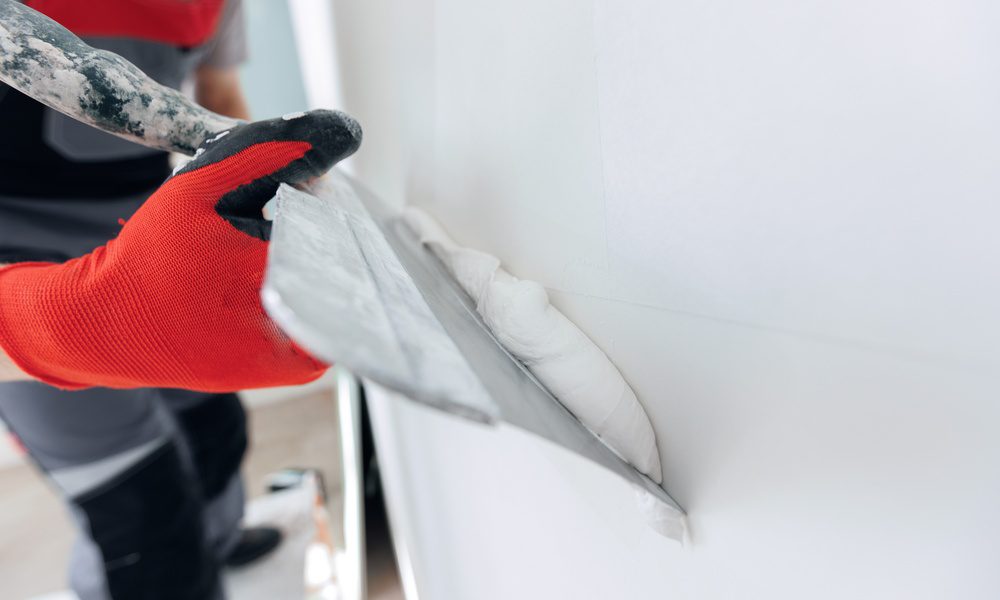
From scalloped to skip trowel, drywall can come in all sorts of finishes. Are you curious how drywall installers go about creating each one? Here’s the breakdown on a few of the most common types.
To create any finish, drywall installers need a blade with a lot of flex. This is so they can glide compound across uneven surfaces without digging into them. One type of finish that requires an especially flexible hand is the skip trowel.
To create a skip trowel finish, the installer applies joint compound in thin, irregular patches across the wall, letting the trowel skip over the surface instead of dragging evenly across it. Once the compound dries, those low spots create the depth that gives skip trowel its layered look.
A scalloped finish gets its curved, overlapping pattern from a rounded brush or sponge pressed into wet joint compound. The installer loads compound onto the wall and then stamps the tool repeatedly in a consistent arc. Spacing between each impression determines how tight or open the final pattern looks. If the compound dries before the full section is done, the texture becomes uneven, so installers work in smaller sections to keep the compound workable.
Orange peel gets its name from the way it looks, not how it’s made. Installers spray thinned joint compound or texture compound onto the wall using a hopper gun. The air pressure and compound consistency both affect the size of the bumps. A higher air setting produces finer dots; lower pressure gives you larger, bolder texture. After spraying, installers leave the wall alone to dry without any smoothing.
Knockdown starts the same way as orange peel: compound sprayed onto the wall. The difference is what happens next. Before the texture fully dries, the installer drags a wide knife lightly across the surface to flatten the tops of the bumps. That flattening is what creates the irregular, slightly mottled look knockdown is known for.
Smooth walls take the longest to get right. The installer applies joint compound in thin coats, letting each coat dry before adding the next. Between coats, they sand down ridges and uneven spots so the surface stays flat under paint. Even a small ridge catches light differently than the wall around it, so each layer has to be shaped and checked before the next one goes on.
How drywall professionals create different finishes isn’t just about the tools. It’s the timing, the compound mix, and the judgment call in the moment that separates a finish worth looking at from one that needs to be redone.
Learn when a Canada Temporary Resident Permit may help overcome inadmissibility and support necessary travel.…
For crews using ultra-high-pressure water blasting for coating removal and pipe maintenance, find out which…
When maintenance teams look across a production floor, large machines naturally command most of their…
Improve chemical purchasing with clear review standards that help facilities manage risk, support safer operations,…
Create a fulfilling life in NYC with practical habits that support personal confidence and help…
Keep refurbished electronics looking fresh with simple cleaning tips for screens, keyboards, ports, vents, cases,…