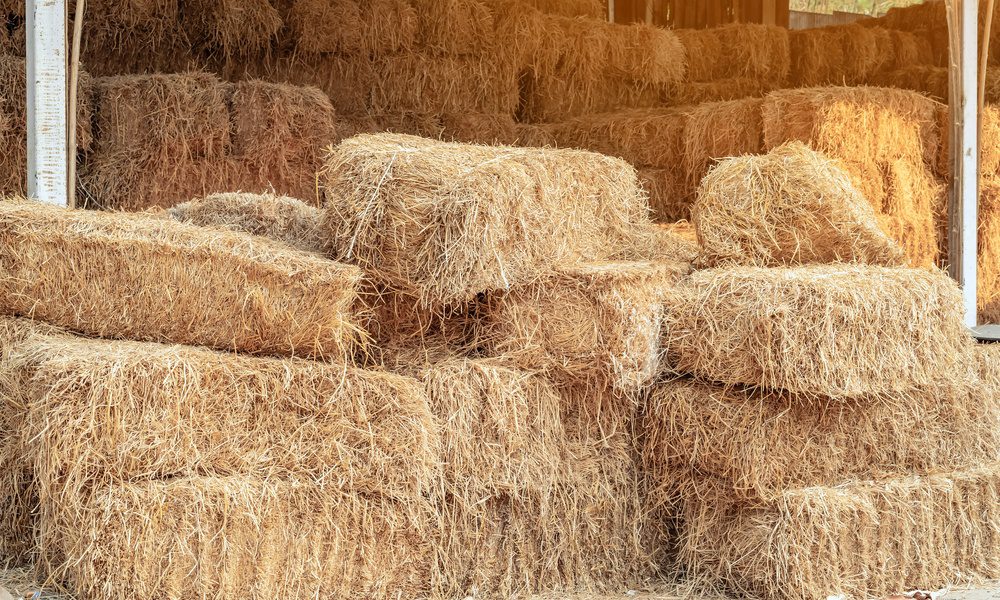
Hay baling looks simple from a distance: cut, dry, rake, bale, and store. But anyone who works around hay knows small decisions in the field can change the final bale in a big way.
A hay baler depends on many things: timing, machine setup, crop condition, and a little patience. Below, we’ll outline some of the most common mistakes that can affect the quality of a hay bale.
Moisture makes or breaks a bale. Hay that goes into the baler too wet can heat, mold, lose feed value, and become harder to store safely. Hay that gets too dry can shatter leaves, especially in legumes like alfalfa, which reduces quality before the bale ever leaves the field.
A moisture tester can help remove guesswork. Weather, crop type, bale size, and storage plans all matter, so farmers should check conditions throughout the day instead of relying on one early reading.
A baler works best when it receives a steady, even flow of hay. Thin spots, heavy clumps, and crooked windrows can create lopsided bales that stack poorly and shed weather unevenly.
Consistent windrows also help the baler maintain better density from side to side. That means the rake, tedder, and baler all play a role in the result, not just the baler itself.
Another mistake that can affect hay bale quality is incorrect belt tension. Baler belt tension matters because the belts control the bale as it forms, and if the belts are too loose or too tight, they can fray or create loose and uneven bales. Checking belts before the season, during heavy use, and after tough field conditions can prevent small problems from turning into poor-quality bales.
Bale density affects handling, storage, transport, and feeding. A bale that is too loose may lose shape, absorb more moisture, or fall apart during handling. A bale that is too tight may trap moisture, become too heavy, or stress the baler.
The best setting depends on the crop, moisture level, bale type, and storage plan. Instead of choosing one setting for every field, operators should make small adjustments and watch how each bale forms.
A baler that misses maintenance rarely produces its best work. Worn pickup teeth, dull knives, damaged belts, loose chains, and poor lubrication can all reduce hay baler quality.
Pre-season inspections help, but in-season checks matter just as much. Dust, stems, rocks, and long days in the field can wear parts quickly, so a short inspection before baling can save time, hay, and frustration later.
Better bales start with better habits. Baling at the right moisture level, building even windrows, checking belt tension, adjusting density settings, and maintaining the machine all help protect hay quality. Each step may seem small, but together they create bales that hold their shape, store better, and deliver more value after harvest.
Remember all these mistakes to avoid when using an automatic transfer switch so you can…
Internal business data should be for more than routine record-keeping. Start understanding how to use…
Poor attic ventilation traps heat and moisture, increasing the risk of roof damage and higher…
Discover which U.S. regions face the highest wildfire risk and why dry weather, wind, heat,…
Fire truck warning signs help crews catch leaks, pump trouble, brake changes, and lighting issues…
Learn how compressed air supports construction work by powering tools, improving efficiency, and helping crews…