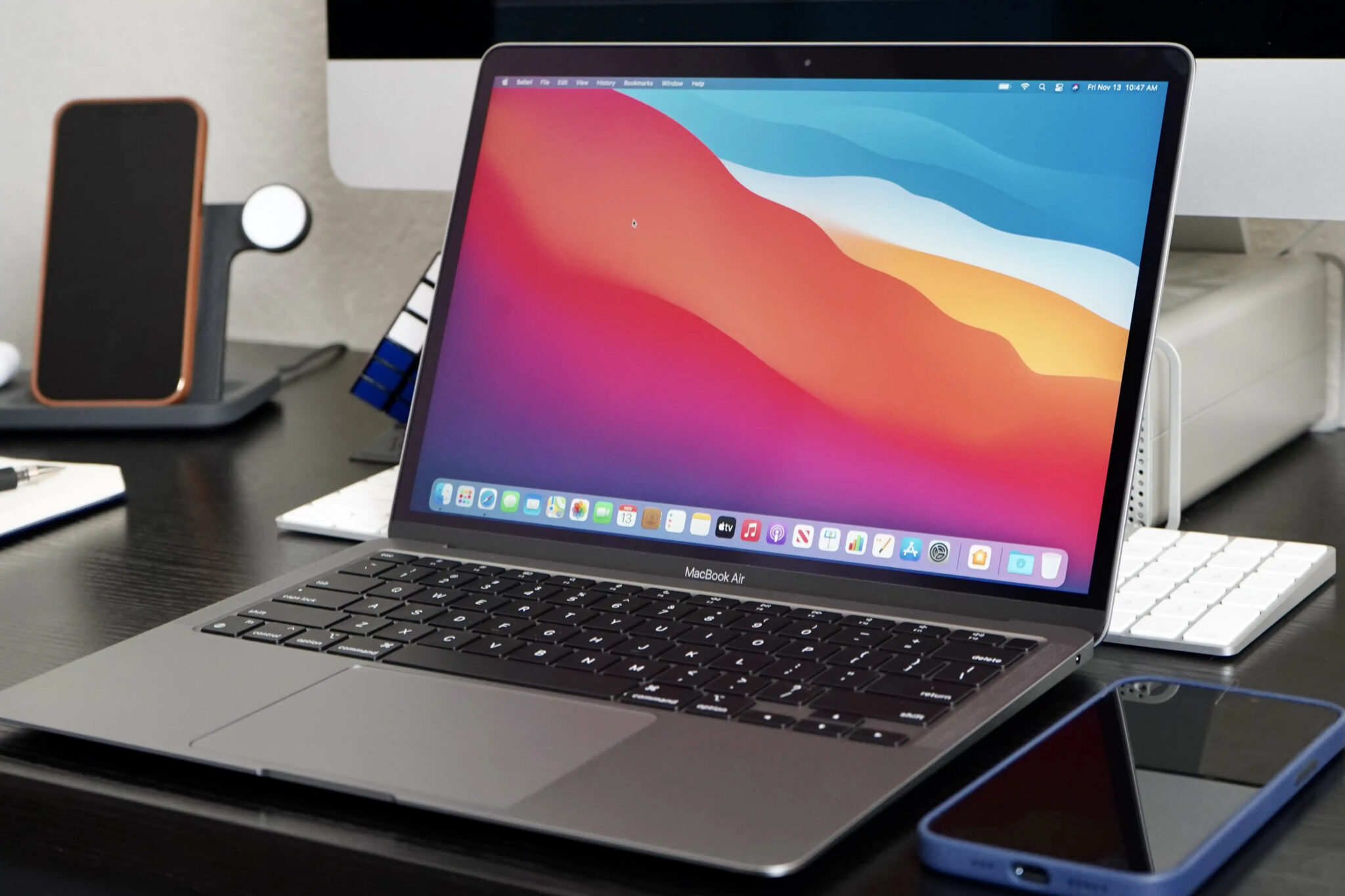
Over the past few years, Apple’s transition to its own silicon has reshaped not only performance expectations but also resale value across the MacBook range. In 2025, M-series MacBooks consistently command stronger trade-in offers than many previous generations. While all Apple products tend to hold value better than average laptops, Apple Silicon machines have created a noticeable gap between older Intel models and newer architectures.
One of the primary reasons for this sustained value is performance longevity. M-series chips were designed with efficiency and scalability in mind. Even early-generation M1 MacBooks continue to deliver smooth multitasking, strong battery life, and responsive performance several years after launch. Because the real-world difference between successive M-series generations is often incremental rather than dramatic, older Apple Silicon machines remain highly usable and therefore desirable on the second-hand market.
Battery efficiency also plays a significant role. M-series MacBooks are known for exceptional battery life, often lasting a full working day on a single charge. This efficiency reduces long-term wear and enhances overall user satisfaction. Buyers looking for pre-owned devices are more confident investing in machines known for cooler operation and lower thermal stress, which contributes directly to higher resale demand.
Software support is another key factor. Apple Silicon remains central to Apple’s long-term strategy, meaning M-series MacBooks are prioritised for macOS updates and new features. Devices that are expected to receive operating system support for several more years naturally hold more value. Buyers are reassured by the knowledge that their purchase will not become obsolete in the near future.
Thermal performance and noise reduction also influence resale strength. M-series MacBooks, especially fanless or low-noise designs, offer a noticeably quieter experience than many older Intel models. This improved thermal management not only enhances daily usability but also reduces the perception of aging hardware. A laptop that runs cool and quiet simply feels more modern, even after several years of use.
Market demand reinforces this trend. As more users upgrade within the Apple ecosystem, a steady supply of well-maintained M-series machines enters the resale market. At the same time, demand remains high because many buyers prefer Apple Silicon over Intel due to its reputation for efficiency and future compatibility. When demand stays strong relative to supply, trade-in values remain stable.
In the middle of these dynamics, when users decide to sell MacBooks powered by Apple Silicon, they often discover that quotes remain surprisingly competitive. This resilience reflects not only performance but also broader brand trust in Apple’s hardware quality. Buyers recognise that these machines were built for longevity, which supports continued demand in the pre-owned market.
Build quality further strengthens resale value. MacBooks are known for durable aluminium enclosures, high-quality displays, and reliable keyboards. Combined with the architectural improvements of Apple Silicon, this physical durability makes M-series machines particularly attractive to secondary buyers who want dependable hardware without paying full retail prices.
Specification tiers also contribute. Higher-memory and higher-storage configurations retain especially strong value. Since many modern MacBooks cannot be upgraded after purchase, original specifications matter significantly. Sellers who invested in higher-tier models often see proportionally better trade-in returns compared to base configurations.
Economic considerations play a part as well. In periods where consumers seek value-conscious purchasing options, refurbished and trade-in markets grow more active. M-series MacBooks, offering a balance of performance and affordability relative to brand-new models, become natural targets for budget-aware buyers who still want long-term usability.
Ultimately, the strong trade-in performance of M-series MacBooks in 2025 reflects a combination of design foresight and market perception. These machines were built not just for short-term performance but for sustained relevance. Buyers trust them, sellers benefit from that trust, and trade-in platforms respond accordingly.
M-series MacBooks have effectively redefined expectations around depreciation. Rather than losing value rapidly, they maintain a steady position in the resale market because they continue to meet real-world needs. For anyone considering an upgrade, this exceptional value retention makes the decision far easier — knowing that their current device still holds meaningful worth in 2025.