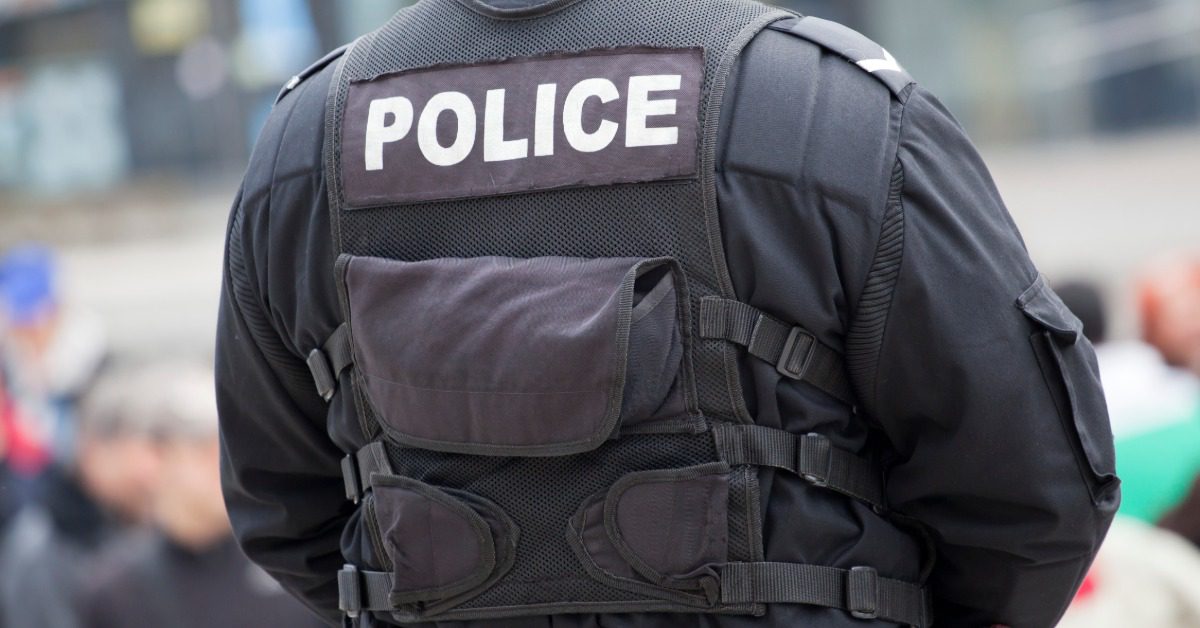
Police employ a range of protective and functional gear to protect them while they patrol neighborhoods and respond to emergencies. But what types of tactical equipment do they wear, exactly? Here are some of the common pieces they carry on duty.
Officers wear ballistic vests designed to absorb or deflect the impact of bullets and, depending on the protection level, stabbing implements as well.
The National Institute of Justice rates body armor on a scale from Level IIA up to Level IV. Patrol officers typically wear soft armor rated at Level IIIA, which sits close to the body under or over the uniform. Tactical units in higher-risk situations often switch to hard plate carriers that can stop rifle rounds.
The duty belt is essentially a wearable workstation. It holds the officer’s firearm, spare ammunition, handcuffs, a radio, a baton, pepper spray, and a medical pouch, all within reach without the officer needing to dig through a bag or break their posture.
Duty belts are typically reinforced with a stiff inner liner that keeps the weight distributed across the hips. Without that structure, a fully loaded belt would sag and shift constantly throughout a shift.
Many officers will wear gun belts alongside or in place of a standard duty belt setup. These belts support safe and effective carry by holding the holster firmly against the body so the firearm doesn’t shift during movement. A loose or poorly constructed belt lets the holster torque outward, which slows the draw and increases the risk of accidental contact with the trigger guard.
Tactical gloves protect the hands during foot pursuits, arrests, searches of vehicles or buildings, and any situation where broken glass or sharp edges are involved.
Cut-resistant materials line most tactical gloves at the palm and fingers. Many versions also include knuckle reinforcement for impact protection. Officers who work in colder climates wear insulated versions that preserve dexterity without sacrificing warmth.
Not every officer wears a helmet on a standard patrol shift, but tactical units and riot response teams rely on them heavily. Ballistic helmets protect against fragmentation and lower-velocity projectile threats. Riot helmets prioritize coverage, with full face shields and padding built to absorb repeated blunt impacts.
Some helmets include rail systems along the sides and top so officers can mount lights or communication devices without modifying the helmet itself.
Tactical gear isn’t uniform across every department or unit. What an officer wears depends on their role, the risk level of their assignment, and department policy. But across the board, each piece of gear serves a defined purpose: keeping the officer protected and operational from the start of the shift to the end.
Protect your car from everyday hazards with smart driving and maintenance habits. Keep your vehicle…
Discover elegant fall nail color pairings beyond orange and brown, featuring rich, flattering combinations that…
Explore how custom materials help capacitor prototypes refine performance, dimensions, processing, and scale-up before full…
Planning a retirement around lake living means balancing lifestyle, convenience, and future needs to create…
Protect your property's market appeal with expert roof care that prevents costly mistakes from creating…
EV charging can support greener properties when infrastructure matches transportation needs, energy use, building conditions,…