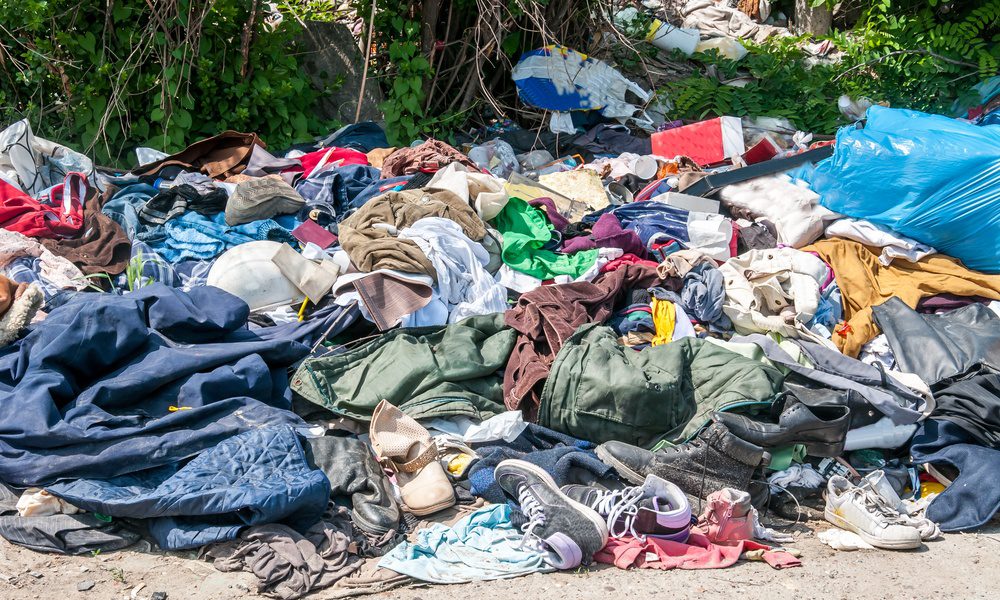
When the time comes for a closet cleanout, questions arise about what happens to the discarded clothes. Landfills pile up, and pollutants enter the soil and water.
Understanding the environmental impact of non-recycled clothing will help people make more sustainable choices for the garments they want to remove from their home.
Across the globe, people discard millions of tons of clothing each year, with a significant portion ending up in landfills rather than being reused or recycled. This growing volume of textile waste reflects a broad pattern of overconsumption and limited recovery systems. Once garments are sent to landfills, their useful life ends because they aren’t reintegrated into new products.
The environmental consequences extend beyond wasted resources. As textiles break down, especially synthetic fabrics, they release greenhouse gases and shed microplastics that can contaminate soil and water systems.
Every garment begins with raw materials and passes through several industrial stages. Cotton cultivation draws upon land and water, while synthetic fiber production relies on fossil feedstocks.
Wet processing and synthetic fiber production are major climate pressure points, requiring significant energy and resources at multiple stages. Discarding garments prematurely wastes each of the inputs. The cycle begins again as new clothing demands fresh material extraction and transportation.
Although low prices may make frequent purchases seem harmless, they don’t eliminate the environmental costs involved. Instead, they distance consumers from the environmental damage that occurs throughout the supply chain.
Although donating clothing can be a responsible choice, it doesn’t always ensure the reuse of the garments locally. The Boston University School of Public Health reports that large volumes of donated clothing from the United States are exported to countries with limited waste management infrastructure. While some organizations resell items, many shipments include garments in poor condition that local markets cannot absorb.
As a result, communities receiving these exports must manage the excess. The clothing is commonly discarded in open dumps or burned once disposal systems reach capacity. These practices contribute to air pollution and can contaminate soil and water through chemical runoff. Ultimately, the export of low-quality clothing shifts a significant portion of the environmental burden from wealthier consumer nations to communities that had little role in the original consumption.
Rapid trend cycles treat clothing as temporary even while fabric remains wearable. Low prices encourage frequent purchases while inconsistent construction shortens garment life. Together, these conditions move clothing through closets at a pace beyond the capacity of clothing recycle systems, causing a negative environmental impact.
Reducing this strain begins with intentional consumption. When shopping for new items, search for sustainable clothing companies that produce durable, ethically manufactured garments. When possible, repair clothing—such as fixing seams or replacing worn hardware—to refrain from throwing items away prematurely.
When garments are no longer necessary, keeping them in circulation is key. Searching for charity donation drop-off locations that will give clothing items to families or recycle the garments responsibly is a good first step. By approaching clothing use and disposal thoughtfully, individuals can slow the cycle of waste and lessen the environmental consequences.
Create cleaner embroidery designs with practical tips for fixing thread breaks, puckering, skipped stitches, and…
Learn how to build a shipping container office with practical guidance on site preparation, insulation,…
Before buying a 3D printer for a new hobby, explore how 3D printing and the…
Find out how often you should inspect your crawl space at home so you can…
Get ahead of tax season with practical tips for small business finances. Here's how to…
Brand managers who plan campaign costs strategically gain a sharp view of budgeting, timing, priorities,…