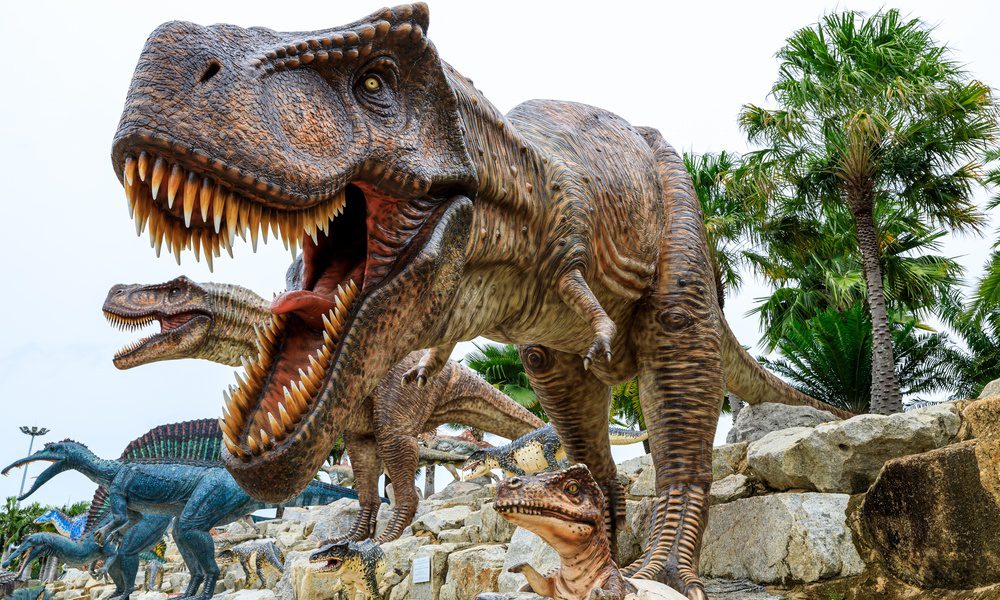
Dinosaur movies make prehistoric life feel close enough to touch, even when the science takes a few giant steps sideways. Filmmakers need drama, so they often trade careful accuracy for speed, suspense, or a bigger scare. The fun starts when viewers learn what films got right and what they exaggerated. Here are some facts that answer how accurate dinosaur movies are without ruining the adventure or wonder.
Dinosaur movies love a good chase scene, so giant predators often thunder across the screen at impossible speeds, but this isn’t entirely realistic. A massive animal could still move with real power, but every sudden turn would place stress on its bones and joints.
Paleontologists estimate movement by studying fossil footprints along with skeletal structure, which can reveal how an animal carried its weight. For large predators, the evidence points to strength more than agility. Movie scenes often ignore that limit because a chase needs pressure, not a physics lesson, but the real animal did not need racehorse speed to feel dangerous.
When it comes to how accurate dinosaur movies are, its worth noting that the scaly appearance isn’t fully accurate. Newer discoveries have complicated that image by showing that some dinosaurs had feather-like coverings, while others carried skin textures that films rarely attempt in detail.
Feathers do not belong on every dinosaur, and accuracy always depends on the species being shown. A film can make a reasonable design choice when it follows the evidence for that animal, but studios often choose the cleaner look because classic creature designs feel familiar.
Films like Jurassic Park shaped how many viewers still imagine dinosaurs because the story treated them like active animals instead of sluggish museum pieces. That approach did not come from nowhere. The movie drew on a real shift in paleontology, which had already moved away from the old idea that dinosaurs were slow swamp creatures.
Interestingly, there are variousthings Jurassic Park got right and wrong about Dilophosaurus, especially its size; the real animal grew much larger than the movie version. Fossil evidence also does not support the famous venom-spitting scene, though it remains one of the film’s most memorable moments.
Dinosaur sounds remain one of the hardest movie details to check because vocal organs usually do not fossilize. Scientists can study skull shapes and compare dinosaurs with living relatives, but that evidence still leaves plenty of room for uncertainty. Filmmakers face a different challenge. They need a sound that instantly tells the audience that danger has entered the scene.
A real dinosaur may have produced deeper sounds than many films suggest, and some species may have used closed-mouth calls. Movie sound design turns those unknowns into something thrilling. It may not give viewers a perfect reconstruction, but it can still capture the fear and scale people expect from a prehistoric giant.
The best dinosaur movies entertain without asking viewers to treat every detail as fact. Science keeps changing the picture, so new discoveries can make familiar movie scenes look different over time. That shift gives viewers a better way to enjoy the story while still noticing where imagination took over.
Thoughtful bridesmaid dress choices can shape the wedding-day experience, with small details influencing comfort, confidence,…
Watch how medical routines shape family mealtimes when treatment changes the usual rhythm. Connection can…
Explore business practices that help agricultural suppliers stand out through innovation, customer relationships, operational excellence,…
Learn practical ways to improve your brand presence at industry events and build meaningful connections…
Steady garage routines make vintage car projects less overwhelming. They preserve momentum, improve focus, and…
Use thoughtful care package ideas that are less generic to send comfort with more meaning.…