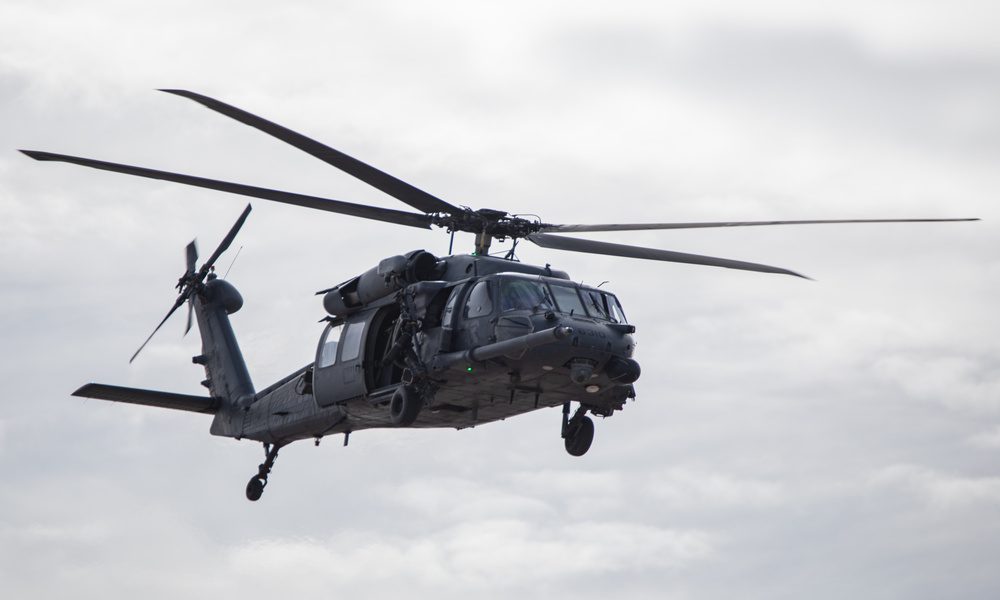
Pilots respect the sky, but they respect the weather even more. While sunny days offer smooth sailing, storms test the limits of both the machine and the operator. Flying a helicopter requires strict adherence to safety protocols when weather conditions deteriorate.
You might wonder how helicopters handle extreme weather conditions without the specialized equipment found on massive airliners. The answer lies in a mix of rigorous training, aircraft capabilities, and smart decision-making.
Wind affects helicopters differently from fixed-wing aircraft. During takeoff and landing, rotors require a stable airframe to generate lift efficiently. Strong gusts can push the aircraft sideways or create a loss of lift near the ground. To counter this, pilots position the nose directly into the wind.
This technique increases stability and gives the rotor blades more “bite” in the air. When turbulence hits mid-flight, pilots immediately reduce speed. Slowing down reduces stress on the airframe and makes the ride smoother for everyone on board.
Fog and heavy rain turn a visual flight into a technical challenge. Most helicopters fly under Visual Flight Rules (VFR), meaning the pilot must see the ground to navigate. When visibility drops below legal minimums, safety requires an immediate change in plans.
Advanced helicopters equipped for Instrument Flight Rules (IFR) allow pilots to fly through clouds using only cockpit instruments. However, if the aircraft lacks these instruments, the pilot must land or turn back before losing sight of the horizon.
Thermometers dictate how much weight a helicopter can carry. Hot air becomes less dense, which forces the engine and rotor system to work harder to produce lift. On scorching days, pilots calculate performance data before starting the engine to confirm they have enough power to climb.
Conversely, cold air improves engine performance because dense air creates more lift. However, freezing temperatures pose a risk of fluid thickening or mechanical components becoming brittle.
Ice accumulation scares every pilot. When moisture freezes on the rotor blades, it changes their shape and disrupts airflow. This reduces lift and increases drag, making the helicopter struggle to remain airborne.
Very few helicopters carry de-icing equipment. Therefore, avoiding clouds during freezing temperatures remains a top priority. If a pilot encounters ice, they must descend to warmer air immediately to shed the buildup.
Thunderstorms contain severe updrafts, downdrafts, and hail that can damage the aircraft structure. Helicopters generally avoid these cells by a wide margin. The maneuverability of a helicopter offers an advantage here; unlike a jet stuck on a specific airway, a helicopter can alter its course instantly or land in a field to wait out the storm. Radar systems help pilots spot the most intense parts of a storm cell miles before they arrive.
The flight environment plays a massive role in how weather affects flight. Wind behaves differently when channeled through city streets compared to when it sweeps across open plains.
Pilots must understand the differences between flying helicopters in urban and rural areas to anticipate how weather systems interact with the terrain. In cities, a sudden storm might require landing on a helipad, while rural areas typically provide more open landing zones.
Weather remains the ultimate authority in aviation. No mission matters more than the safety of the crew and passengers. Sometimes, the most skilled demonstration of how helicopters handle extreme weather conditions involves the decision to stay on the ground. Pilots check forecasts constantly and carry backup plans for every flight. When nature shows its strength, patience, and preparation, keep the rotors turning safely.
Preserve cherished memories through thoughtful fabric choices and careful craftsmanship that create a personal keepsake…
Check out all the common mistakes to avoid when buying ink for your tattoo shop…
Protective finishes depend on adhesion, coating chemistry, curing, thickness, and testing to resist wear, corrosion,…
Chemical processing equipment faces corrosion, heat, abrasion, pressure, and wear. See how facilities can protect…
Discover some practical ways to protect laboratory research integrity, from careful documentation and calibration to…
Your 30s are a good time to stop rebuying the same clothes. Explore which wardrobe…